

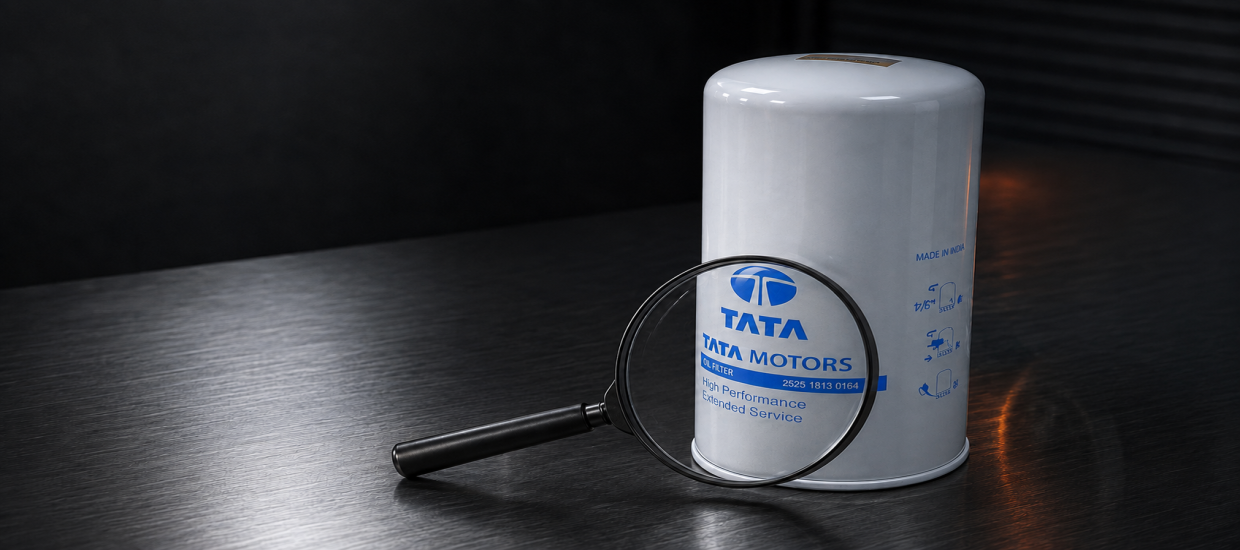
How to Identify Counterfeit Parts and Select Genuine Parts
August 24, 2026Why Genuine Parts Matter
A commercial vehicle depends on every component working correctly under demanding operating conditions. Filters, brake parts, engine components, belts, hoses, bearings and electrical parts are designed to meet specific requirements for fitment, material strength and performance.
Counterfeit or inferior parts may look similar to genuine components, but they can be manufactured using unsuitable materials and poor-quality processes. This can result in reduced efficiency, premature wear, damage to connected systems, unexpected breakdowns and longer vehicle downtime.
Check the Packaging Carefully
Genuine spare parts are normally supplied in professionally manufactured packaging with clear printing, consistent colours and accurate product information.
The brand name, logo, part number, barcode and product description should appear clearly and consistently. Security labels, holograms, QR codes or tamper-evident seals may also be included, depending on the manufacturer.
Blurry printing, spelling mistakes, unusual colours, damaged seals, poor-quality cardboard or missing identification details can indicate that the product requires further verification. Packaging alone, however, should never be treated as complete proof of authenticity.
Verify the Part Number and Application
The part number printed on the packaging should match the number marked on the component and shown on the supplier's invoice.
It is also important to confirm that the part is correct for the exact vehicle model, chassis or engine application. Two components may appear identical while having different dimensions, pressure ratings, valve settings, electrical specifications or material requirements.
If the part number is missing, altered or inconsistent, the component should be verified before installation.
Inspect the Product Markings and Finish
Genuine components usually carry clear and consistent markings such as a part number, batch code, date code, technical specification or country of manufacture.
Uneven fonts, smudged printing, poorly aligned labels or information that differs from the packaging should be treated with caution.
The physical finish should also be inspected. Rough edges, weak welds, irregular machining, thin metal, brittle plastic, loose fittings, poor threads or low-quality rubber seals may indicate inferior manufacturing.
Examine Filters and Safety-Critical Components
For oil, fuel and air filters, inspect the casing, gasket, end caps, centre tube and filter media. The pleats should be uniform, the seals should fit correctly and the component should feel firmly assembled.
Poor-quality filter paper, weak adhesive or unsuitable internal valves can allow contaminants to circulate, restrict fluid flow or reduce filtration performance.
Brake, steering and suspension parts require particular care. Inferior components may wear quickly, overheat, leak or fail under heavy loads. Any doubtful safety-critical part should be verified before it is fitted to the vehicle.
Be Cautious of Unusually Low Prices
A competitive price is normal, but a price far below the usual market range can be a warning sign.
Counterfeit parts are often cheaper because they may use inferior materials, reduced quantities of filter media or inadequate quality-control processes. The initial saving can quickly become expensive if the component causes repeated replacement, related damage or an on-road breakdown.
The total cost of a part should be measured through reliability, service life and protection of the vehicle—not only its purchase price.
Purchase From a Trusted Supplier
A reliable supplier should be able to confirm the source and application of the component, provide a proper quotation or invoice and assist with part-number verification.
The supplier should also explain clearly whether the item is genuine, OEM or a high-quality aftermarket alternative. Traceable documentation, appropriate return conditions and warranty support provide additional confidence.
Purchasing from unknown or untraceable sellers increases the risk of receiving incorrectly described, unsuitable or counterfeit components.
What to Do When You Are Unsure
If the authenticity or suitability of a component is uncertain, do not install it immediately.
Keep the packaging and invoice, photograph the labels, security features, part number and product markings, and consult a trusted spare-parts specialist. Comparing the item with a verified genuine component can also help, although legitimate manufacturers may occasionally update packaging or product design.
No single visual check can confirm authenticity. The safest decision combines careful inspection, correct application verification, traceable documentation and a dependable supplier.
Choose Genuine and High-Quality Parts With BHEST
At Bangalore Heavy Equipment Spare Parts Tr Co LLC, we supply genuine and high-quality spare parts for Tata, Ashok Leyland, Eicher–Volvo, Hyundai, Daewoo and other commercial-vehicle applications.
Our range covers filters, brakes, engine, clutch, transmission, suspension, steering, differential, cooling, electrical, pneumatic, body and air-conditioning systems. Our team can assist with part-number identification and help select the correct component for your vehicle.
Choosing trusted parts helps protect your vehicle, your driver, your cargo and your business.
THINK GENUINE. CHOOSE BHEST.